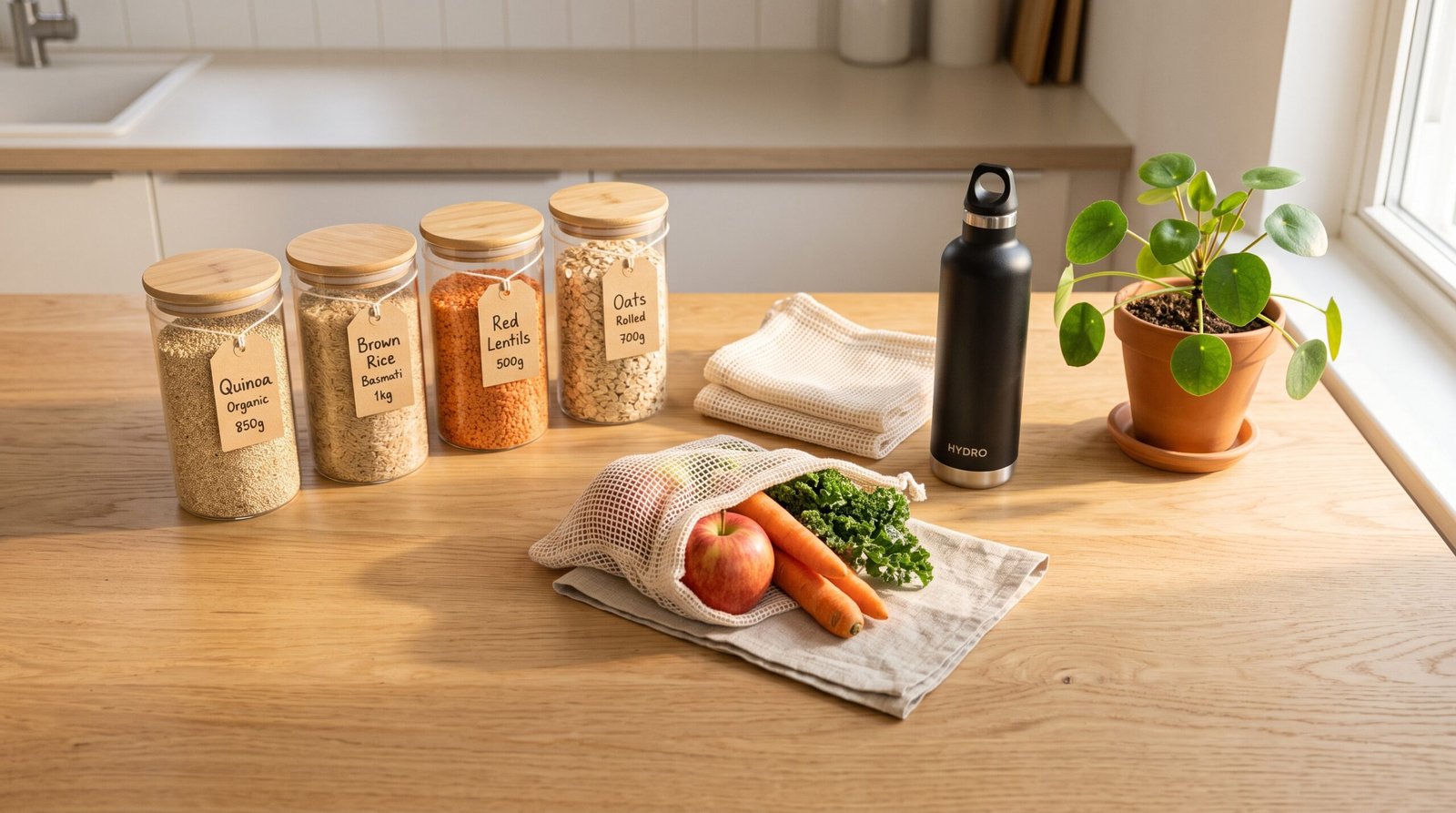
Are you looking to lower your carbon footprint while simultaneously saving money on everyday household expenses in 2026? Embracing sustainable living & zero-waste on a budget is the ultimate strategy to protect the environment without overspending on expensive eco-friendly specialty items.
Without practical guidance, eco-conscious beginners often fall into the trap of purchasing pricey sustainable gadgets and branded goods. In this comprehensive resource, we will break down simple sustainable living & zero-waste on a budget tactics that help you cut waste, reduce monthly bills, and live mindfully.
Why Sustainable Living & Zero-Waste on a Budget Matters in 2026
Adopting eco-friendly habits does not require a large income. At its core, zero-waste living is about consuming less, reusing what you already own, and preventing unnecessary waste from entering landfills.
According to environmental sustainability research at the Environmental Protection Agency (EPA), reducing household food waste and single-use packaging significantly cuts municipal waste management costs and greenhouse gas emissions. Combining eco-conscious habits with frugality allows you to build sustainable financial routines while making a positive impact on the planet.
7 Best Sustainable Living & Zero-Waste on a Budget Tips
Implementing small, cost-effective daily swaps creates compounding ecological and financial savings over time:
1. Repurpose What You Already Own First
The greenest product is the one you already have. Before buying new glass jars or cloth totes, reuse sauce jars, takeaway containers, and old cotton t-shirts as cleaning rags.
2. Buy Whole Foods in Bulk & Shop Seasonally
Avoid overpriced pre-packaged produce and single-serve snacks. Purchasing grains, beans, and spices from bulk bins using your own bags slashes packaging waste and reduces food costs by up to 30%.
3. Make DIY All-Purpose Household Cleaners
Replace expensive commercial cleaning chemicals with simple, effective homemade alternatives. A mixture of white vinegar, water, and baking soda cleans most kitchen and bathroom surfaces effectively for pennies.
4. Transition to Meal Planning & Home Composting
Food waste is a major contributor to both high grocery bills and landfill methane emissions. Planning weekly meals keeps your fridge organized, while simple backyard or vermicomposting turns organic scraps into rich plant fertilizer.
5. Shop Second-Hand & Embrace Thrift Culture
From kitchen cookware to winter apparel, buying pre-owned goods via thrift stores or local community exchanges saves items from landfills and costs a fraction of retail prices.
6. Audit Home Energy & Water Consumption
Install low-flow sink aerators, switch to LED bulbs, and unplug vampire electronics when not in use. Lowering energy consumption protects natural resources while directly reducing your utility bills.
7. Switch to Plastic-Free Personal Care Basics
Swap liquid body wash in plastic bottles for long-lasting bar soap, bamboo toothbrushes, and safety razors. These durable swaps eliminate plastic waste while lasting significantly longer.
Comparison of Sustainable Living & Zero-Waste on a Budget Habits

Evaluating upfront costs versus long-term financial savings helps you prioritize the most effective swaps for your household budget.
| Eco Swap / Habit | Initial Upfront Cost | Est. Monthly Savings | Difficulty Level | Primary Environmental Impact |
| DIY Vinegar Cleaner | ~$2.00 | $10 – $20 | Very Easy | Eliminates single-use plastic bottles |
| Bulk Grain Shopping | $0 (Use old jars) | $15 – $35 | Easy | Prevents plastic packaging waste |
| Safety Razor Upgrade | $15 – $25 | $5 – $10 | Medium | Stops disposable plastic razor waste |
| Meal Planning & Scrap Prep | $0 | $40 – $80 | Easy | Prevents methane from food waste |
Step-by-Step Workflow for Budget-Friendly Eco Living
Follow this 4-step framework to transition toward a zero-waste lifestyle smoothly:
- Conduct a Trash Audit: Examine your household garbage for 3 days to identify your biggest single-use waste culprits.
- Focus on One Swap at a Time: Master single-use swaps (e.g., bringing reusable bags) before tackling complex home projects.
- Establish a Reusable Go-Bag: Keep cloth bags, a reusable water bottle, and coffee mugs in your car or backpack.
- Join Local Swap Groups: Utilize community networks like Buy Nothing groups to trade unused household goods freely.
For more tutorials on sustainable lifestyle management, frugal living, and home organization, visit our homepage to read our latest guides.
Final Thoughts on Sustainable Living & Zero-Waste on a Budget
Living an eco-friendly life does not require perfection or an expensive lifestyle upgrade.
- Start with simple, free swaps like meal planning and reusing glass containers.
- Focus on reducing overall consumption before purchasing new eco-labeled products.
- Remember that small, consistent daily actions lead to meaningful financial and environmental benefits.
By applying these sustainable living & zero-waste on a budget strategies, you can minimize environmental impact while keeping your household finances strong. Sustainable progress built on simple daily habits is the ultimate key to lasting ecological impact.
For more guide and helpful tips, feel free to visit our homepage.