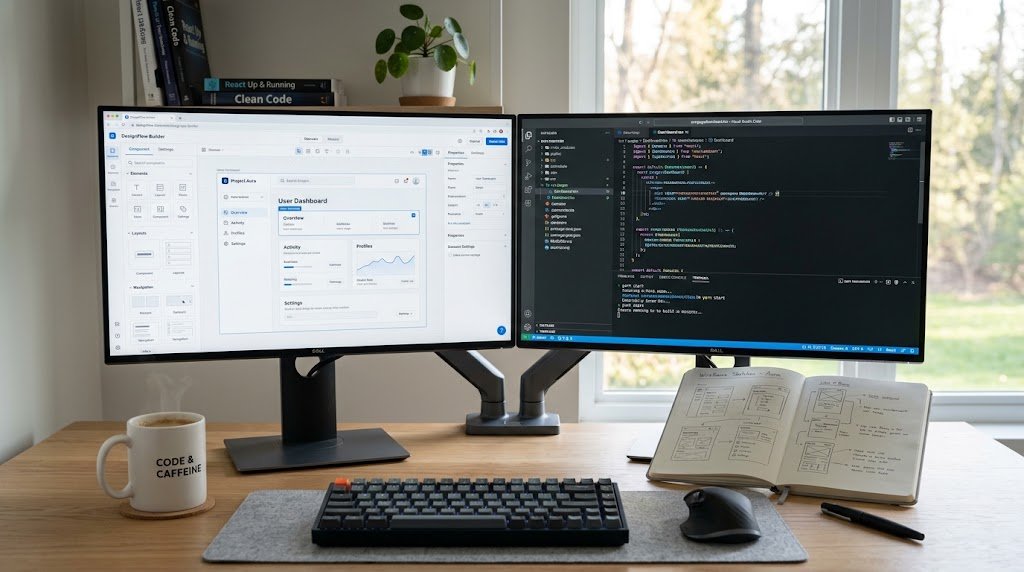
Building custom software solutions in 2026 no longer requires years of computer science study; instead, it relies on mastering no-code app development & tutorials to turn ideas into functional digital products. Whether you are launching a SaaS startup, creating an internal business tool, or automating daily workflows, visual building platforms allow non-technical founders to design and deploy applications rapidly.
Without proper database structuring, platform selection, and responsive layout design, amateur projects can easily suffer from security vulnerabilities or performance bottlenecks. In this comprehensive guide, we explore essential no-code app development & tutorials strategies to help you launch powerful web and mobile applications without writing a single line of code.
Why No-Code App Development & Tutorials Matter in 2026
The democratized software landscape has reached a point where visual drag-and-drop builders generate production-ready code with enterprise-level security. Modern visual tools integrate seamlessly with AI APIs, external databases, and automated backend logic, allowing solopreneurs to build scalable platforms in weeks rather than months.
According to industry technology analysis by Gartner, visual and low-code development platforms now power a major percentage of new enterprise applications worldwide. Leveraging structured no-code app development & tutorials guarantees that your app architecture remains scalable, responsive, and secure as your user base expands.
[Affiliate Link / CTA Box: Try Bubble & Webflow Free for 14 Days]
7 Best No-Code App Development & Tutorials Hacks for 2026
Building a feature-rich visual application requires combining robust backend logic with intuitive user interface design:
1. Select the Right Platform for Your Specific Project Scope
Match your software requirements with the correct visual engine. Choose Bubble for complex logic web SaaS platforms, FlutterFlow for native iOS and Android mobile apps, or Webflow for content-driven web portals.
2. Master Relational Database Schemas Before Building UIs
Never jump straight into visual styling without mapping your data structure first. Define custom Data Types, Fields, and Option Sets, establishing clear relational links between User accounts, Products, and Activity logs.
3. Utilize REST APIs and Webhook Integrations for Custom Logic
Expand your application’s capabilities by connecting external microservices. Connect automation hubs like Make or Zapier, payment processors like Stripe, and generative AI endpoints like OpenAI via standard REST APIs.
4. Design for Mobile-First Responsiveness
Ensure your visual layouts adapt fluidly across desktop monitors, tablets, and smartphones. Utilize flexbox and CSS grid layout containers built into modern visual builders rather than absolute element positioning.
5. Implement Strict Data Security and Privacy Rules
Protect sensitive user data by setting up strict server-side Privacy Rules. Restrict database query access so users can only view, edit, or delete records that belong explicitly to their account.
6. Optimize Application Loading Performance
Prevent slow page render times by optimizing database search constraints. Paginate large database lists, compress media assets into WebP formats, and avoid heavy client-side workflows that overload browser memory.
7. Conduct Rigorous User Testing and Automated QA
Test edge cases, form validations, and user onboarding steps prior to public deployment. Utilize staging environments to verify workflow logic and database operations before pushing updates to live production databases.
Comparison of Top No-Code App Builders

Evaluating feature sets and deployment environments helps you choose the right visual development stack.
| Platform Name | Best For | Platform Type | Database Power | Learning Curve |
| Bubble | Full-stack web SaaS applications | Web App Builder | High (Relational DB) | Moderate to Steep |
| FlutterFlow | Native iOS & Android mobile apps | Mobile App Builder | High (Firebase / Supabase) | Moderate |
| Webflow | Content sites & marketing web apps | Web Designer / CMS | Moderate (CMS Collections) | Low to Moderate |
| Glide | Quick internal tools & simple mobile apps | Spreadsheet / DB Apps | Moderate (Airtable / Sheets) | Very Low |
Step-by-Step Workflow for Building Your First No-Code App
Follow this 4-step framework to convert a rough software idea into a functional digital product:
- Map Out Wireframes and User Journeys: Draw user interface screens and flowcharts before logging into visual editors.
- Configure Database Schema and User Roles: Set up relational tables (Users, Products, Transactions) with precise privacy settings.
- Build the Front-End Layout and Connect Workflows: Drag elements onto the canvas and link buttons to backend database triggers.
- Test, Launch, and Scale: Visit our homepage to read our latest tutorials on AI automation, tech career transitions, and digital productivity tools.
[Affiliate Link / CTA Box: Download Our Free No-Code Architecture Blueprint PDF]
Final Thoughts on No-Code App Development & Tutorials
Building software without coding skills has unlocked unprecedented opportunities for innovators, creators, and business owners in 2026.
- Match your software requirements with the ideal visual builder platform.
- Prioritize relational database structure and privacy rules from day one.
- Automate backend workflows to deliver smooth user experiences.
By applying these no-code app development & tutorials techniques, you can launch custom applications faster, iterate based on user feedback, and scale digital products efficiently.
For more guide and helpful tips, feel free to visit our homepage.